
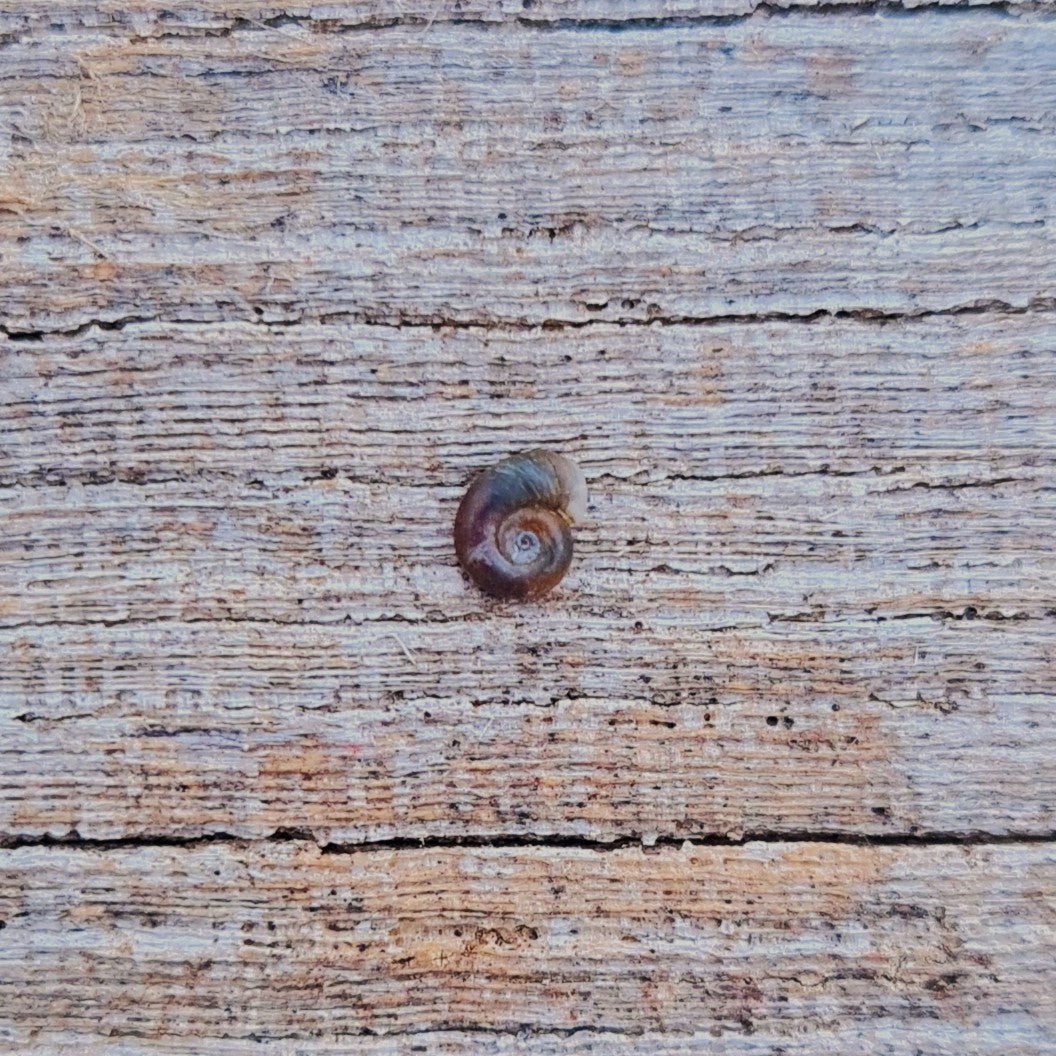
The smallest snail in the world?
F. MattierIt is now known that an aquarium in which aquatic snails are present balances more easily.
This is because cycles struggle to establish themselves in the presence of fish, as they devour all microfauna whose role in nature is precisely to break down organic matter, then deliver it to bacteria. One link is missing: that of the "detritivores".
It turns out that aquatic snails are quite good detritivores, and their shell protects them to some extent from fish.
It is therefore logical that aquariums in which snails live are more stable.

But some people find them unsightly. Others, for example for nano aquariums, regret their excessive size.
It is true that if waste is abundant, the snail population adapts to this abundance. In case of food shortage, on the contrary, snails become rarer.
In natural fishkeeping, care is taken to favour non-exotic snails, so as not to release invasive species into the wild. The melanoides is an exception, as it does not survive winter in our regions. But the example of apple snails, whose sale had to be banned in 2012 (and even free exchange), shows that caution must prevail.
Especially since there is no shortage of risk-free species: the bladder snail, for example, is the most popular small snail. Efficient, small (less than one centimetre), amusing (it sometimes swims on its back!), it spares plants and eats algae.

But the ramshorn snail is also appreciated. More spectacular, because larger, it exists in several mutations (pink or blue), even if its natural brown version remains superb.

Above all, it is now also possible to introduce into your aquarium or pond one of the smallest snails in the world! I name the planorbids.
A tiny snail of the genus "Gyraulus", this tiny aquatic snail exists in our regions.
Almost impossible to find in trade, I discovered it in a body of water in 2016. It took me several years of breeding away from any fish (this to eliminate any possible parasite) to have a healthy stock.

It is a very rare curiosity, as some close species are protected and very difficult to tell apart.
This snail measures only a few millimetres in diameter and barely 1 mm thick! It is found in algae on which it feeds. It also eats (given its size) bacterial films that cover stones, glass, and plants. It is practically unknown to fishkeepers to this day because industrial breeding does not know how to multiply it.
It can be present in large numbers without being noticed. It therefore works very quietly and gives the impression that the aquarium is made up only of plants and fish!

If it manages to slip into the filter, let it be: it will find there all that it loves and will prepare food for the bacteria!
One last detail of importance: it does not fear winter and lives without problem in an outdoor pond all year round.
So give it a (very small) place in your aquariums, and prepare your magnifying glasses to observe it in all its superb details!