
Heatwave, fish tanks, ponds, and wild animals
F. MattierWhat if aquarium keepers held solutions to the consequences of global warming?
What if we put them to the service of a biodiversity suffering like never before?
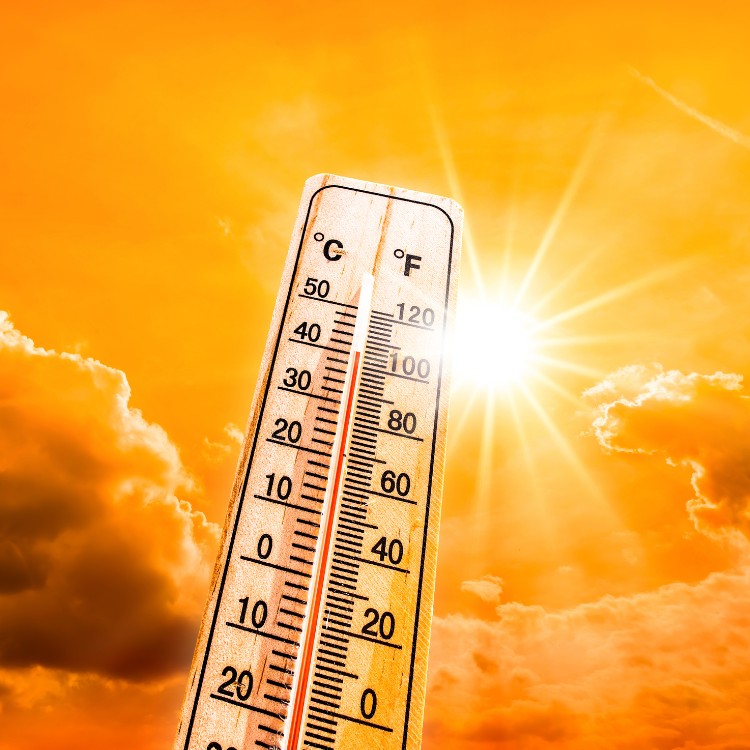
The temperatures recorded in recent days are alarming.

In an overheated apartment, an aquarium quickly becomes too warm and the means to limit the phenomenon quickly reach their limits.
The same goes for a trash bin pond that has been recklessly placed in full sun. The walls exposed to the south heat the water along its entire height.
A relative solution is to shade the walls, for example with reed mats, cardboard, an old rug...
Less severe heatwave in a pond
Fish and other inhabitants have nowhere to take refuge, except in the case of a semi-buried or buried trash bin pond, where the bottom remains cooler than the surface.

In a pond, we find the natural effect of heat limitation.
No walls exposed to the sun, the bottom and edges are below ground level and relatively preserve some coolness.
The deeper the pond, the clearer the temperature difference with the surface.
Aquatic or marsh plants provide shade.
We find ourselves in a new situation: our aquariums house tropical fish... and they now suffer from the heat!
We, aquarium keepers, can act!
This should lead us to question the suffering of our local wildlife, which faces temperatures that even tropical fish might dread.

This heatwave came at the end of spring, when many animals still have litters or broods. Most temporary ponds, which make up the majority of ponds in Europe, have been dry for weeks.
The mortality of individuals weakened by the heatwave becomes significant.
We are aquarium keepers and nature is something that speaks to us.
But above all, we hold a skill and a passion that nature needs: that of water!
Giving water, saving lives
Those of us who have already begun to turn to their balcony or garden to create micro-aquatic ecosystems could only notice: wildlife rushes there.
You send me photos and videos every week of your water holes, and we see birds, insects, or small mammals taking turns, especially at night.
Having access to a little water during a heatwave makes the difference between life and death for most animals.
A simple water dish placed on a balcony will save hundreds of insects, and a few birds.

A “puddle” arranged in the garden is enough to end the suffering of dozens of young birds barely out of the nest this season.
At night, the neighborhood hedgehog will come to find what it needs to survive.
In town as in the countryside, it is often impossible for an animal to find a few liters of water to drink, survive, nurse its young.
Let’s make micro-ponds!
A hole dug in a shady corner with a few spade strokes, at the bottom of which you place a simple plastic sheet (an unpierced garbage bag can suffice), and you have a micro water point!

Put a few critters in it to bring it to life (Water lice? Daphnia? Ostracods?) or a few sprigs of elodea or Hornwort, be sure to keep it filled with water…
Above all, if it is deeper than 10 cm, put in a piece of wood or stones just above the surface to prevent the drowning of careless animals
A lizard, a shrew, or a hedgehog may need it to reach the edge.
This simple puddle can save hundreds of lives during the summer. If it never dries out, many insects will lay eggs there, including the dragonfly. It, along with its predatory larvae, will protect you from mosquitoes.

A small camera placed near this oasis will show you the nocturnal activity at dawn, sometimes unexpected. A squirrel in the middle of the city, a marten or a pine marten, sometimes the discreet weasel!
As in the savannah, predators and prey take turns drinking there.
A truly effective gesture
At the moment when we understand how much biodiversity is in danger, each of us can make a gesture that will have real and significant consequences. Drinking just once can end the programmed agony of an animal.
Start very small, and do it without great ambition.
You will discover the joy of contact with wildlife, even in the heart of the city. A robin coming to bathe is a delightful sight.

Biodiversity needs water. Ponds are disappearing at a dramatic rate in France. Soils are being paved over, puddles and ruts become rare and dry.
A garden without a water point deprives itself of an incredible wealth of life. Toads return with a simple small pond, dragonflies spot it quickly, coolness forms around it. All the cycles that need the presence of water reappear, and they are many.

Forget about perfect lawns.
Dig holes.
Give water to nature and bring this water to life.
Plant it, shade it, observe it, watch over it.
Become the favorite spot of the surrounding nature!
And this aquarium-keeping adventure, often started with a lonely goldfish in our childhood, will end up saving these lives that we all need.
6 comments
Merci
Grand merci à vous ….
J’ai dans mon jardin 2 bassins 1000l et 500l …ce n’est pas grand chose..mais les oiseaux et grenouilles y trouvent leur bonheurs et bien d’autres petits insectes encore …..comme j’aimerai un peu plus d’espace……