
6 ideas to feed your fish as in the wild

In the wild, our aquarium fish obviously do not eat industrial flakes!
More than 99% of their diet consists exclusively of small live prey: insects and insect larvae, worms, small crustaceans, etc.
Not only do these prey provide them with fresh nutrients of unmatched quality, but they also allow them to hunt... which they sorely miss in an aquarium!
A wild fish spends more than half its time searching for and chasing prey.
Our fish are what we call "micro-predators." That is to say, hunting is second nature to them.
A fish that does not have the chance to hunt live prey becomes more vulnerable to infections and parasites.
Its colors are less vivid and it reproduces less willingly.
Frozen prey exist, but they have two drawbacks:
- they are inert and therefore lack the precious fleeing behavior that prompts the fish to hunt;
- the uneaten portion decomposes immediately and pollutes the aquarium.
The preferred live prey of your fish are more numerous than you might think, and they allow for variety in their diets.
The sight of fish regaining their hunting instinct is fascinating!

1 - Daphnia: little queens of the phytoplankton, their jerky swimming excites the fish. They love to hunt these small crustaceans, very rich in proteins and hemoglobin. Daphnia form the basis of fish diets in the wild and are very easy to raise yourself. It is "the red gold" of the water world...

2 - Gammarus: a kind of small freshwater shrimp, gammarus are large prey that swim very fast. Perfect for cichlids and other sufficiently sized fish, they measure between 1 and 10 mm. With smaller fish, they will settle permanently in the aquarium. Only the newborns will then be eaten.

3 - Water lice: these are freshwater woodlice, very useful for cleaning the aquarium or garden pond. They can even be introduced into filters! Perfect for feeding fish of all sizes, since young water lice are tiny, and some adults reach 15 mm.

4 - Blackworm: it is a true delicacy for our fish! These aquatic worms settle in the aquarium substrate. Fish that catch them enjoy these very slender worms which can reach about ten centimeters in length.
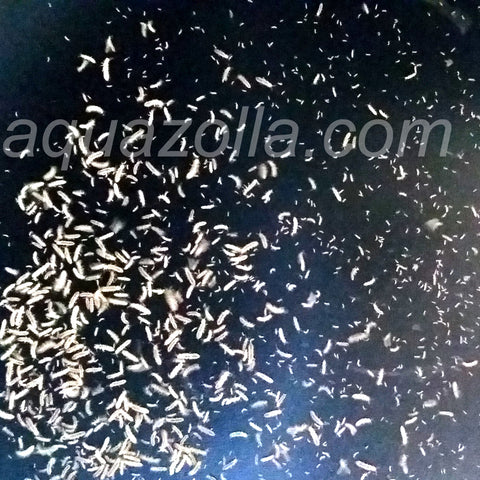
5 - Springtails: these non-aquatic critters hop on the water surface. Fish that hunt at the surface like guppies, bettas, danios, and others relish them. Very easy to raise, just sprinkle them on the surface. Your fish will catch them one by one, creating a lively show in the aquarium.

6 - Finally, if you want guidance in a particularly easy and productive breeding, to regularly give your fish the tiny worms they love, you can turn to Grindal worms, whose culture fits in a simple box with its lid!
Aquazolla has gathered all the essentials for this breeding (equipment, strain, food, and a complete guide) in the Zollabox Fish S, which allows you to start this culture with ease.
To learn more about natural fishkeeping, do not forget Mattier’s blog.