Purple loosestrife: a flowering wild plant for natural banks and ponds
What is Purple loosestrife?
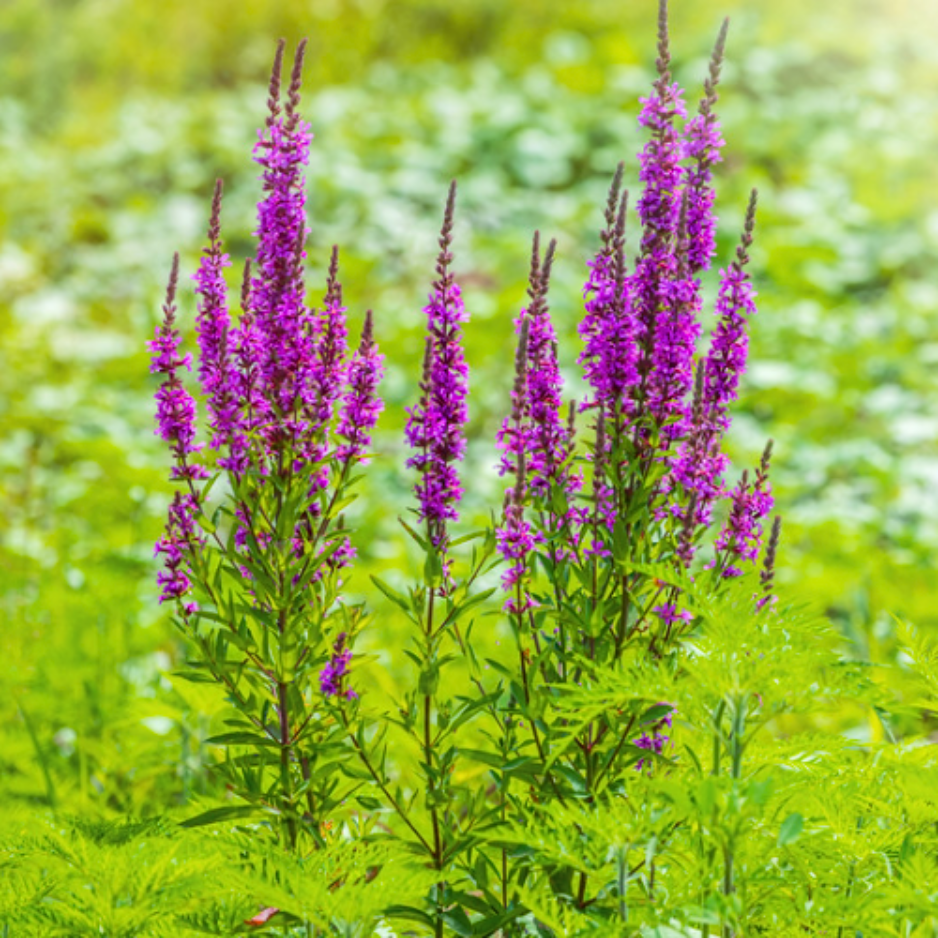
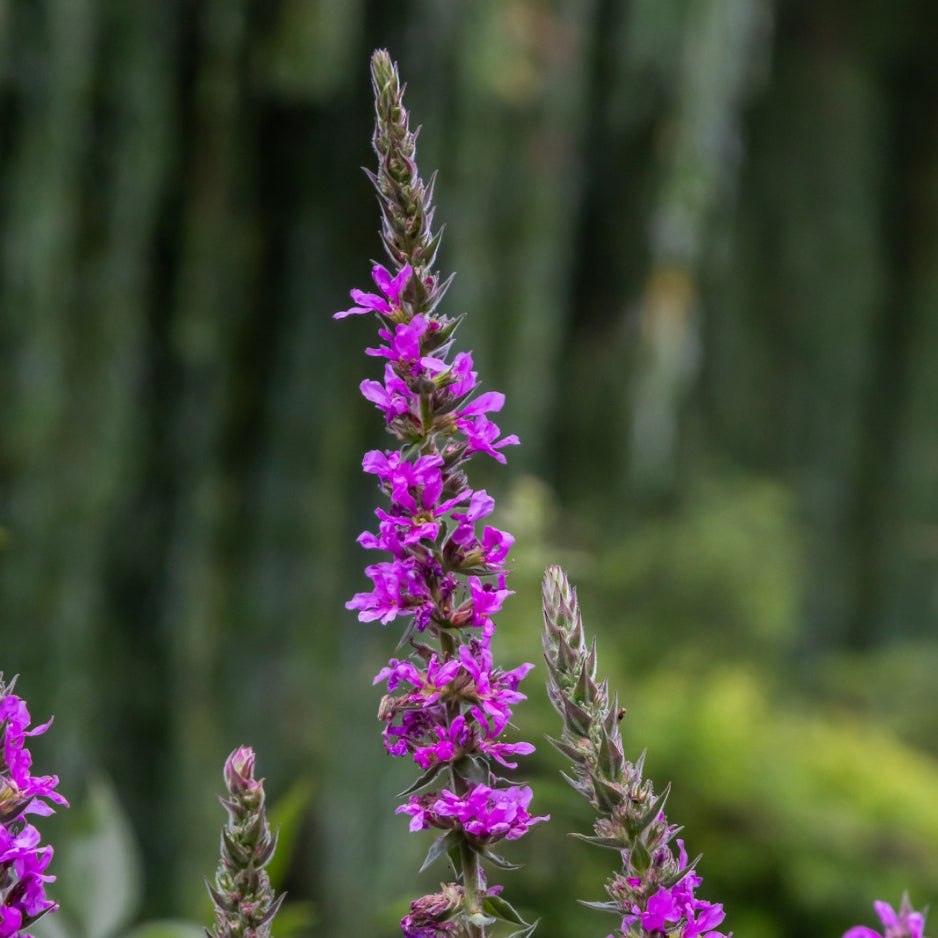
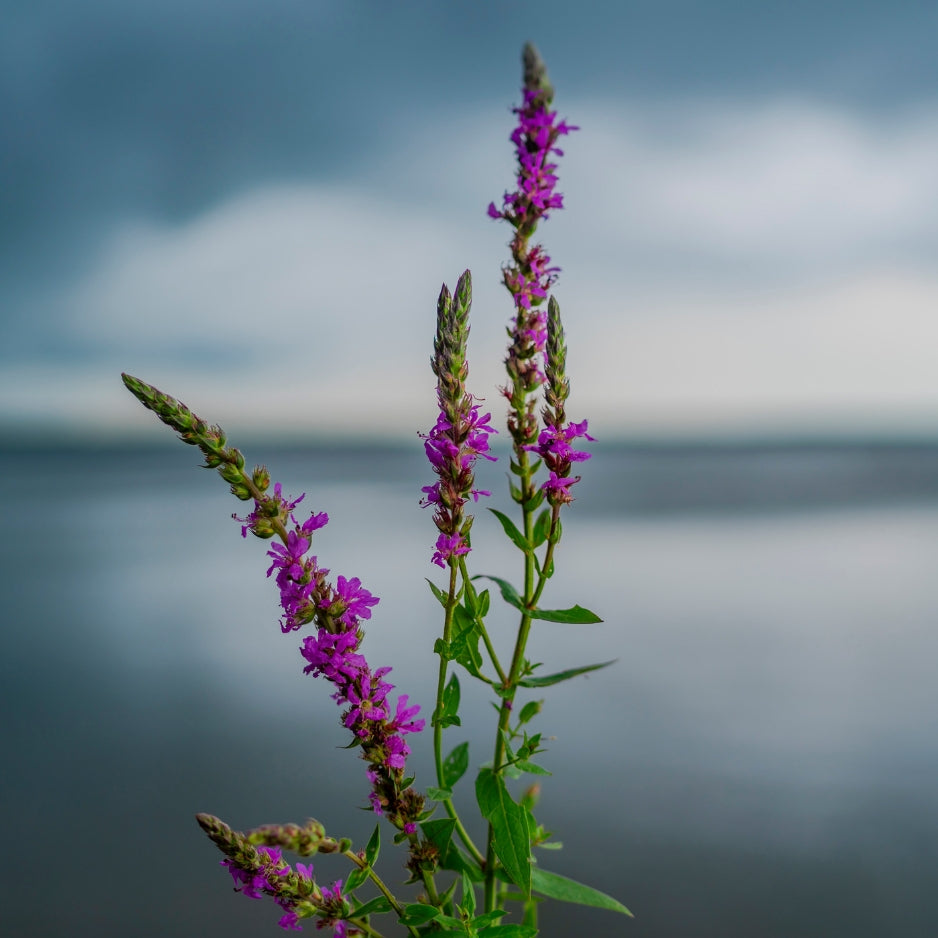
Purple loosestrife (Lythrum salicaria, also called “lythrum”) is a wetland perennial whose spectacular purplish-pink flower spikes, shaped like compact, stylized spikes, rise from June to September to a height of up to 1.2 m. Naturally found along ditches, ponds, and marshes in Europe, it likes to “keep its feet wet”: constantly moist or submerged roots with emergent foliage. Nectar-rich, native, and hardy, it immediately structures the bank, giving it a wild appearance while attracting large numbers of bees, butterflies, and hoverflies.
Why add Purple loosestrife to the edge of a pond?
- Natural filtration: its roots absorb nitrates and phosphates → healthier water.
- Bank stabilization: dense rhizomes that limit erosion.
- Biodiversity: a nectar-rich flower frequently visited by pollinators of many species.
- Long flowering period: purplish-pink color from June to September, with a superb vertical effect from the inflorescence.
- Ease of care: tolerates frost (−15 °C) and temporary drying out, without requiring any fertilization.
Purple loosestrife care
- 🌱 Planting: place the young plant at the water/soil edge or submerge it up to 15 cm deep.
- 🏔️ Substrate: moist soil, mud, sand, or even no soil at all (free roots) in aquaponic setups (for example, in a hanging basket).
- ✂️ Pruning: cut off the faded flower stalks in autumn to stimulate the growth of several stems the following year.
- 🔄 Division: every 2–3 years to rejuvenate the plant and spread it more widely.
- 🌿 Self-sufficient: no chemical fertilization required—it takes care of itself!
Tips for using Purple loosestrife effectively
- 🌸 Combine it with marsh iris or water mint, which are its companions in the wild: low cover (mint) + tall flowering (iris and Purple loosestrife).
- 🏞️ Ideal for: • Edges of ponds or natural pools. • Outdoor tub ponds, mini-pools, natural mini-ponds • Edges of a garden pond (filter plant for natural ponds).
- 🌺 Pinch out the main stem as soon as it reaches 20 cm: it will produce two flowering stalks instead of one.
FAQ - Purple loosestrife
Is Purple loosestrife invasive?
In Europe, no. It is a native species. It is not particularly expansive, either, and is very manageable.
Can I plant it in a small garden pond?
Yes: it only needs a basket or a pocket of soil at the edge, submerged by a few centimeters.
Does it need protection in winter?
No need: the rootstock is hardy down to −15 °C; only the above-ground stems dry out in winter.
Does it really attract insects?
Yes, very much so. Its flowers are highly attractive to pollinators and feed bees, bumblebees, hoverflies, and butterflies all summer. This is what it has in common with water mint.
Is it useful in a pond without a filter?
Absolutely: by consuming excess nutrients, it contributes to the balance and purification of the water.
Additional information
Scientific name: Lythrum salicaria
Adult height: 60–120 cm (sometimes more)
Packaging: 1 rooted plantlet (indicative weight: 20 g)
Guarantee: bare-root plants, without rock wool or artificial substrate
Recommendation: even though it is not classified as invasive, please never release the plant into the wild in places where it does not occur naturally