Untreated paddy rice: raising fry and feeding aquarium microfauna
What is untreated paddy rice?
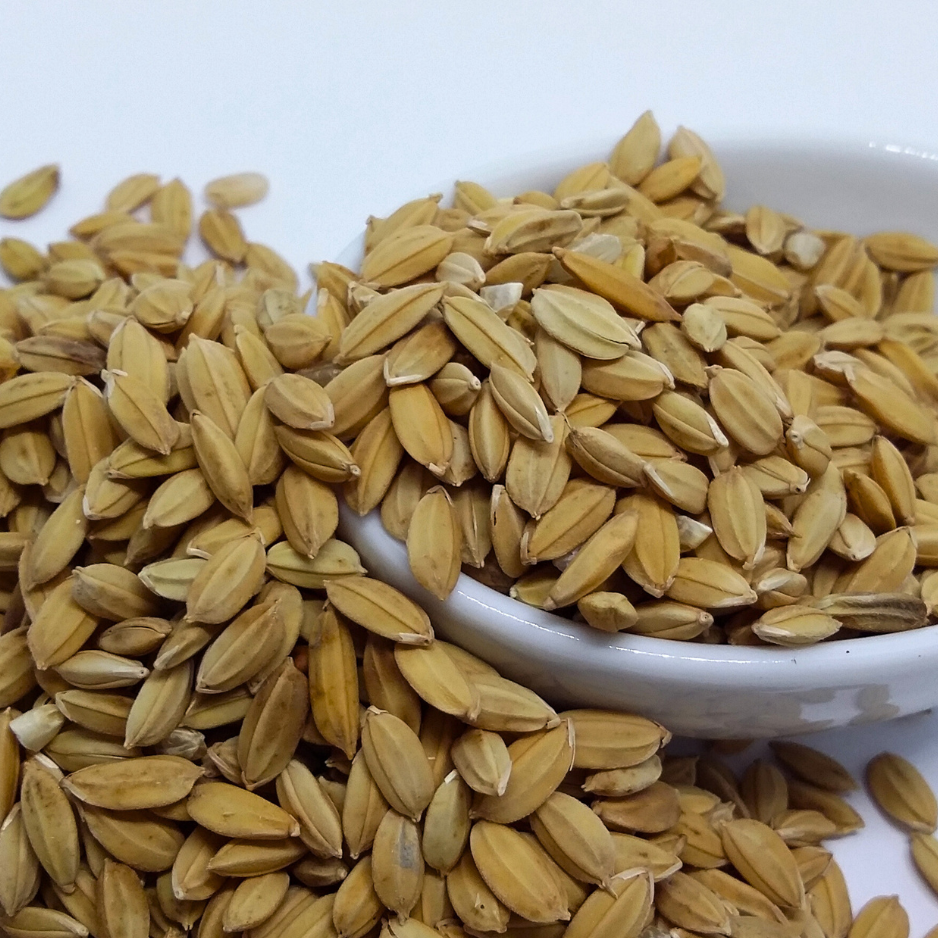
These are raw rice grains with all their original husks, free from pesticides and treatment, and capable of germinating. When added to water, germination triggers a bacterial bloom followed by a proliferation of infusoria (protozoa, ciliates, paramecia, etc.), creating a living food chain to start your cultures (fry and microfauna) and natural aquariums.
Why use it in natural aquariums?
- Feed microfauna: diverse microbial production and natural food for daphnia, ostracods, and others.
- Rapid seeding: a few grains are enough to start the biological cycle of an aquarium or a pond-in-a-bin.
- Ideal for fry: provides extremely fine infusoria if you anticipate the need and prepare germination before hatching. The first natural food for the smallest fry.
- Economical and sustainable: a very small quantity is sufficient. A 100% natural and versatile product, to be stored away from heat and moisture.
Usage tips
- Daphnia and microfauna: add a few grains to rested water (to allow the chlorine to dissipate) or aquarium water. Within a few days, the dormant forms of zooplankton (and phytoplankton) contained in the husks will awaken and multiply.
- Seeding an aquarium or pond-in-a-bin: a few grains are enough to initiate bacteria and infusoria. There is no need to add too much: the strains best suited to the environment will multiply and colonize it on their own.
- Fry: start germination a few days before hatching so that you have an “infusoria soup” at the right time. Water at 22-24°C speeds up the process, after which you can take a few drops of this culture to feed the fry.
- Storage: keep away from heat and moisture. Preferably use within 6 months.
Recommended uses
- Daphnia culture: simple, natural starter food, as a supplement to phytoplankton.
- Breeding egg-laying fish: first food from the moment the fry hatch, together with vinegar eels.
- Low-tech aquariums and educational ponds: rapid start-up of the living cycle.
FAQ - Untreated paddy rice
What is the difference from “classic” white rice?
White rice is husked and polished, so it is of no interest here because it can no longer germinate and has been stripped of its valuable husks. Untreated paddy rice retains its husks and the dormant microbial forms they contain, which seed bacteria and infusoria during germination.
How should it be used for daphnia?
Put a few grains in the rearing bucket or tank. Germination produces phytoplankton and bacteria, which the daphnia will feed on.
How much should be added?
Only a few grains are needed. Start with a few grains, then increase the amount as the daphnia (or ostracod) population grows.
How should fry be fed?
Put grains to germinate in a small dish of aquarium water (or, failing that, rested tap water) at 22-24°C. Do this in advance, if possible before spawning, because it generally takes about a week for the culture to produce enough infusoria. When the water becomes cloudy (and often smelly!), take a few drops from the surface and give them to the fry, supplemented with vinegar eels.
Storage?
Keep dry and away from heat. Preferably use within 6 months for optimal germination.
Additional information
- Type: raw rice grains with all their husks, capable of germinating.
- Size: infusoria are microscopic animals, slightly larger than bacteria, sometimes visible with a good magnifying glass.
- Use: production of numerous and diverse bacteria and infusoria, intended to feed fry and microfauna, or to bring substantial microbial biodiversity to an aquatic ecosystem (aquarium, pond, etc.).
- Tip: to feed fry, remember to start the culture a few days before spawning. Take the culture from the surface, where the infusoria gather, attracted by light and oxygen. A small lamp can also attract them and concentrate them in a specific area for collection.
- Temperature: germination is more successful at 22-24°C.
- Packaging: 20 ml bag of grains to be stored dry (indicative weight: 12 g)
- Recommendation: grains are not intended for human consumption and are reserved for aquarium use.